

Vibe Coding: A Primer and Framework for B2B Leaders
What vibe coding is, how it works, and what B2B media, marketing, and technology executives need to know about AI-generated software development.

By Tony Uphoff · Uphoff on Media · 2026

In my ongoing conversations with B2B media, marketing, and tech leaders, the subject of Vibe Coding keeps coming up.
I’ve been shown remarkable engineering productivity gains — 10X+ — by multiple, experienced software developers. I’ve had several conversations with Enterprise Tech leaders who chuckle and suggest the hype is overblown and that Vibe Coding won’t be challenging Enterprise Software anytime soon…in my experience a sure sign that it likely will! And my discussions with media and marketing leaders suggest there is a ton of interest, some experimentation, and — most critically — a need for frameworks to understand the technology and how to use it.
This post is that framework. Consider it a primer, a backgrounder, and a practical map for non-technical executives (like myself), operators, and investors navigating one of the more consequential shifts in how software gets built.
I. WHAT IS VIBE CODING?
Vibe Coding was coined by Andrej Karpathy, former Tesla AI director and OpenAI co-founder, in February 2025. His description was characteristically precise: you describe what you want in natural language, and AI writes the code. You stop thinking about syntax. You stop debugging semicolons. You stop waiting for a developer to have a sprint slot available.
The human becomes the director. The AI becomes the builder. The interface between intention and output is a conversation.
It’s not that the code writes itself. It’s that you describe the outcome, and the code appears.
This is meaningfully different from autocomplete tools or basic code suggestions. Vibe Coding generates full working codebases from plain English prompts, iterates through back-and-forth conversation, and handles everything from the front-end interface to the back-end logic, without the operator needing to understand how any of it works at the implementation level.
The tools driving this are now mature and widely available:
Cursor: the leading AI-native code editor, built for Vibe Coding workflows
Bolt, Lovable, and Replit Agent: browser-based tools for full-stack app generation with no setup required
GitHub Copilot: Microsoft’s enterprise-grade AI coding layer, now deeply embedded in developer workflows
Claude Code: Anthropic’s command-line agent for complex, multi-file codebases
Windsurf: A newer entrant gaining traction with enterprise development teams
All of these tools are powered by large language models (LLMs) underneath. The same class of AI that powers conversational interfaces like ChatGPT and Claude. What the Vibe Coding tools add is the scaffolding, context management, and workflow design that makes LLMs practically useful for software development.
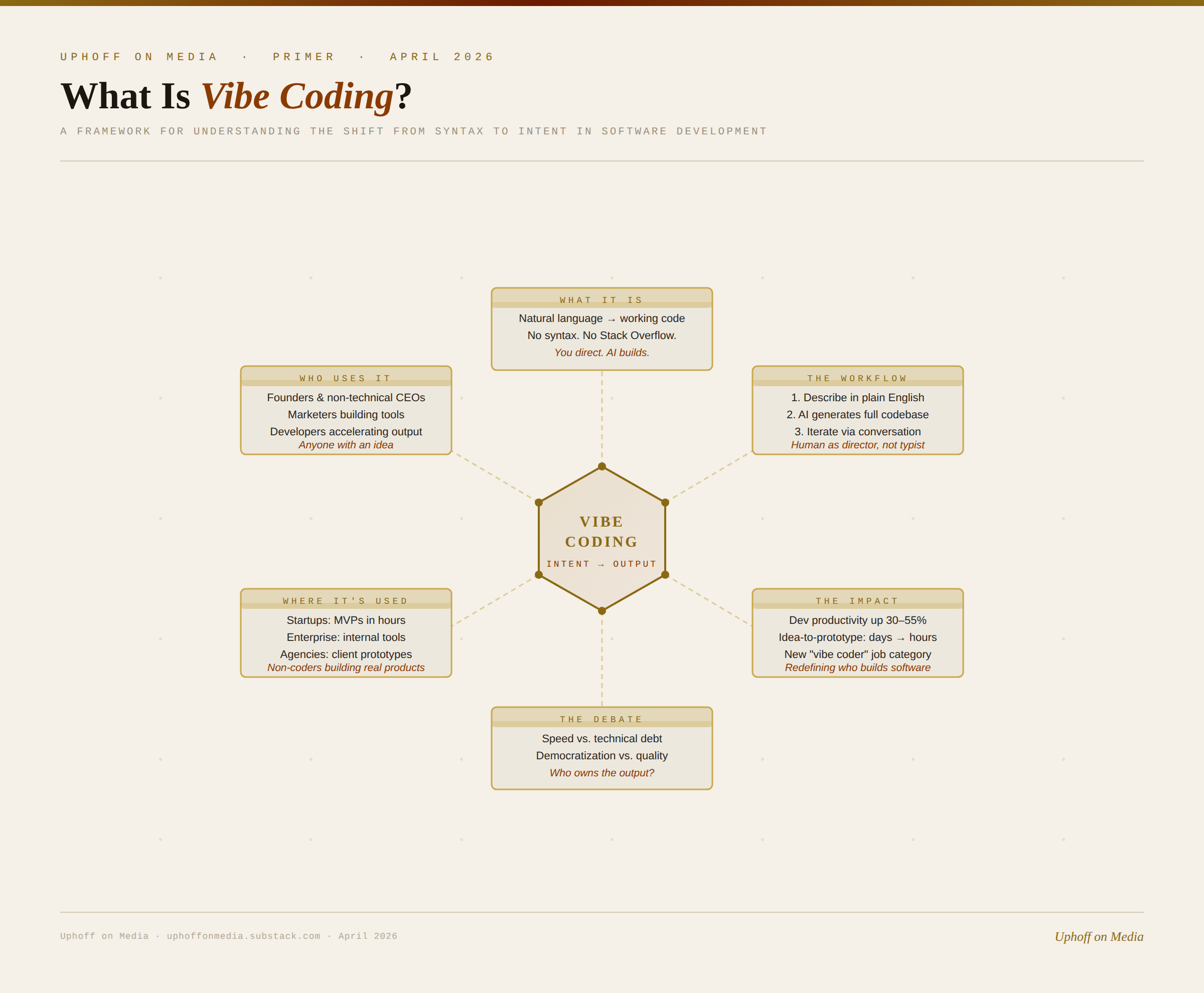
Figure 1: The Anatomy of Vibe Coding: from intent to output
II. THE WORKFLOW: HOW IT ACTUALLY WORKS
Understanding the Vibe Coding workflow is essential to evaluating whether and how it applies to your organization. The process follows four steps:
Step 1: Describe in Plain English
The operator; a marketing manager, a media product director, a solutions engineer, describes what they need in natural language. “Build me a lead capture page that connects to Salesforce and sends a confirmation email.” “Create a dashboard that shows subscriber engagement by content type.” “Build an event registration flow with payment processing.”
Step 2: AI Generates the Full Codebase
The Vibe Coding tool interprets the prompt and generates a working application: HTML, CSS, JavaScript, back-end logic, database schema, API connections. It’s not a mockup or a template. It’s functional code.
Step 3: Iterate via Conversation
This is the step most people underestimate. Vibe Coding is not a one-shot prompt. It’s a dialogue. “Make the button gold instead of blue.” “Add a dropdown for industry.” “The form isn’t submitting, fix it.” The AI debugs, adjusts, and refines in real time, maintaining context across the conversation.
Step 4: Ship
The finished application is then deployed to a web host, a platform, a CRM integration. What used to require a developer, a sprint, a QA cycle, and a deployment process now takes hours.
The development backlog as a structural constraint is being dismantled. Not reduced. Dismantled.
III. WHERE IT’S LANDING: B2B APPLICATIONS
Vibe Coding is not a consumer technology story. Its most significant near-term impact is in B2B. Specifically in the three sectors that Uphoff on Media covers most closely: media, marketing, and technology. The applications are concrete, the productivity gains are measurable, and the implications for how these organizations staff, build, and compete are substantial.
The most instructive examples often come from direct experimentation. I’ve been experimenting firsthand. Using Tasklet; an agentic AI platform that automates business workflows through plain English, I built a client tracker for Uphoff Advisory and a research tool that surfaces data on Agentic AI for future posts. No developer. No code. Just a description of what I needed and an AI that executed it. Creating the two apps took a total of 5 minutes. That’s not quite Vibe Coding in the technical sense — it’s something arguably more immediately useful for business operators: agentic workflow automation. The line between the two is blurring fast.
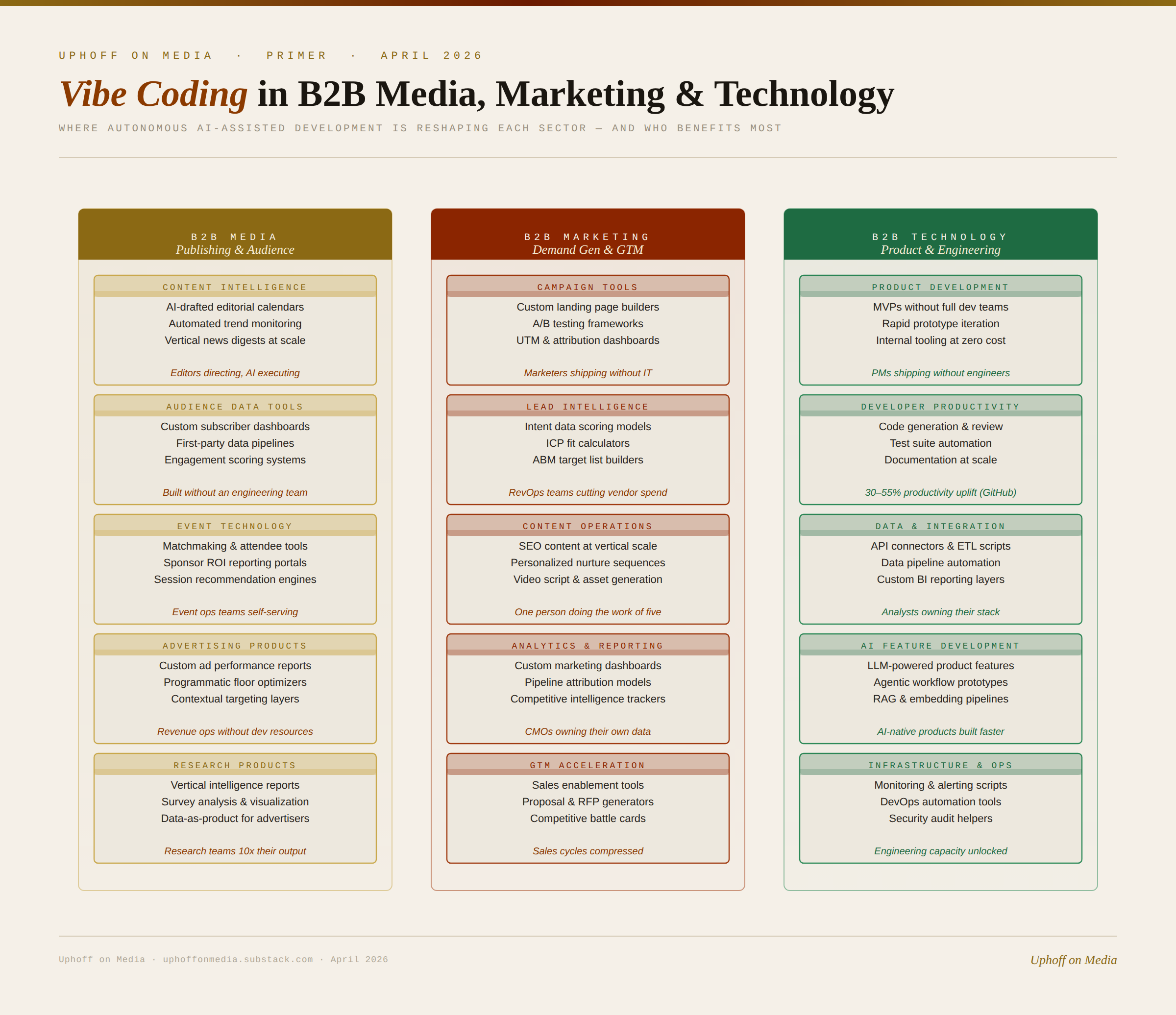
Figure 2: Vibe Coding Applications Across B2B Media, Marketing & Technology
B2B Media
For media companies, the most immediate impact is in the elimination of the dependency on engineering resources for tools that editorial, audience development, and monetization teams need. Newsletter templates, audience analytics dashboards, event microsites, advertiser-facing portals. All of these have historically required developer time that editorial teams rarely had access to. Vibe Coding changes the equation: the people closest to the audience and the advertisers now build the tools they need, on the timeline they need them.
The deeper implication: media organizations that have always competed on content quality now have the ability to compete on product velocity as well. That’s a new capability, and it arrives without a significant increase in headcount.
B2B Marketing
In B2B marketing, the impact is most acute in the gap between marketing’s ambitions and engineering’s availability. ABM campaign landing pages, lead scoring applications, content performance dashboards, ICP segmentation tools. These are all things that marketing teams have wanted for years and have had to either deprioritize or outsource. Vibe Coding puts these capabilities directly in the hands of demand generation managers, RevOps leads, and marketing ops practitioners.
The signal to watch: in the companies I’ve spoken with that have begun experimenting with Vibe Coding in their marketing functions, the productivity gains are not incremental. They are order-of-magnitude. A campaign that required three weeks of engineering time and agency involvement now ships in a day.
B2B Technology
For technology companies, Vibe Coding is simultaneously the most significant opportunity and the most complex challenge. On the opportunity side: internal admin tools, API integration prototypes, product demo environments, and MVP development are all areas where Vibe Coding is delivering demonstrable results. Solutions engineers are building custom proof-of-concept integrations in hours. Product managers are prototyping new features without waiting for sprint allocation.
The complexity: for companies whose core product is software, Vibe Coding raises fundamental questions about code quality, security, maintainability, and ownership. The engineers who chuckle at the hype are not wrong to raise these concerns. They are, however, at risk of underestimating the pace of change.
IV. THE PRODUCTIVITY REALITY
The data on Vibe Coding productivity is early but directionally consistent:
GitHub reports: Copilot users complete coding tasks up to 55% faster than non-users
McKinsey research finds: AI-assisted developers complete tasks 35–45% more quickly
Anecdotal operator data: including from conversations in my own advisory network — suggests that experienced developers using Vibe Coding tools are achieving 5–10X productivity multipliers on certain task types
That last point is important context. The most dramatic productivity gains are not coming from non-technical users suddenly building enterprise software. They are coming from experienced developers who now spend less time on boilerplate, scaffolding, and syntax. And more time on architecture, judgment, and quality. The 10X+ gains I referenced in the opening of this post came from two senior developers with decades of experience. Vibe Coding amplified their expertise; it did not replace their judgment.
The 10X gains I’ve witnessed came from senior developers with 35 years of experience each. Vibe Coding amplified their expertise. It did not replace their judgment.
V. THE LEGITIMATE CONCERNS
The Enterprise Tech leaders who are skeptical of Vibe Coding are not simply behind the curve. Their concerns are substantive:
Technical debt and code quality: AI-generated code can be structurally sound but architecturally fragile. Code that works is not the same as code that scales, that can be maintained, or that follows security best practices.
Security exposure: Non-technical operators building applications that handle customer data, payment information, or system integrations create real security risk if the code is not reviewed by engineers with security expertise.
IP and ownership ambiguity: The legal framework around AI-generated code; who owns it, how it’s licensed, what claims can be made, is still being established.
The Dunning-Kruger risk: The most dangerous Vibe Coding practitioner is the one who doesn’t know what they don’t know. Building something that appears to work and shipping it without understanding its failure modes is a real organizational risk.
None of these concerns are arguments against Vibe Coding. They are arguments for deploying it with judgment. Which, as it happens, is what every consequential technology shift has required.
VI. THE FRAMEWORK: HOW B2B LEADERS SHOULD THINK ABOUT THIS
Based on conversations with operators across B2B media, marketing, and technology, I’d suggest the following framework for evaluating and deploying Vibe Coding:
Inventory Your Queue First
Before experimenting with Vibe Coding tools, map the engineering backlog items that belong to non-engineering functions: marketing’s dashboard requests, media’s editorial tools, the internal ops workflows that never make it into a sprint. That backlog is your starting point. It represents the highest-value, lowest-risk surface for Vibe Coding experimentation.
Start with Internal Tools, Not Customer-Facing Products
Internal dashboards, reporting tools, and workflow automation are the right first applications for Vibe Coding in most B2B organizations. The stakes of failure are lower, the learning curve can be absorbed without customer impact, and the productivity gains are immediately visible.
Keep Engineers in the Review Loop
Vibe Coding does not make engineering judgment obsolete. It changes where that judgment is applied. For any application that touches customer data, payment systems, or core business processes, engineer review of the output is not optional. It is the risk management layer that makes Vibe Coding safe to deploy at scale.
Treat Vibe Coding as a Skill, Not a Tool
The operators in my network who are getting the most from Vibe Coding are not simply running prompts. They are learning how to structure requests, how to iterate effectively, how to recognize when the AI has gone off track, and how to maintain context across a complex build. This is a learnable skill. Organizations that invest in developing it will have a meaningful advantage over those that treat it as a plug-and-play solution.
Watch the Enterprise Software Implications
The Enterprise Tech leaders who suggest Vibe Coding won’t challenge SAP, Oracle or Salesforce “anytime soon” are probably right on the one-to-two-year horizon. On the three-to-five-year horizon, the trajectory is less clear. Vibe Coding is already enabling the rapid development of lightweight alternatives to expensive, complex enterprise tools. The category of “good enough at a fraction of the cost” has disrupted enterprise software before. It will again.
THE BOTTOM LINE
Vibe Coding is not hype. It is also not magic. It is a meaningful shift in the accessibility of software development. One that is already producing measurable productivity gains, enabling new categories of operators to build tools they couldn’t before, and beginning to reshape how B2B companies think about the relationship between their business teams and their engineering resources.
For B2B media leaders, the opportunity is in product velocity and editorial tool ownership. For B2B marketing leaders, the opportunity is in closing the gap between what you want to build and what you’re able to ship. For B2B technology leaders, the opportunity is in developer productivity and the acceleration of prototyping and internal tooling.
The risk in all three cases is the same: deploying a powerful capability without the judgment infrastructure to use it well.
Vibe Coding doesn’t replace engineers. It eliminates the queue. Whether your organization knows the difference will matter.
The pattern is familiar.
The internet didn’t eliminate publishing. It eliminated the gatekeepers of distribution.
SaaS didn’t eliminate IT. It eliminated the bottleneck of infrastructure.
Vibe Coding won’t eliminate engineering. It will eliminate the monopoly that engineers have historically held on who gets to build.
For the executives, operators, and investors reading this: the question isn’t whether Vibe Coding is real. It’s whether your team is already using it, and whether you know.
The views expressed in Uphoff on Media are entirely my own. They don’t represent the opinions of any company I’ve led, any board I’ve sat on, or any investor who’s had the pleasure of debating strategy with me over the years. If something I write here sounds brilliant, I’ll take full credit. If it turns out to be wrong, I was clearly misquoted by myself.
I've known Tony for a few years now, and I've always loved hearing his thoughts on tech and business topics (Tony will tell you he's not a techie, but years of covering them and running tech-adjacent firms have given him a unique trend-spotting instinct).
I'm a long-time enterprise IT exec, living in the world of SEC reporting and audit scrutiny. What Tony describes has many applications in my world, but — as he points out — only after proper review by skilled and experienced practitioners.
I've shared Tony's article with my CTO and senior development managers to get them thinking...thanks, Tony!